Can I Record My Doctor’s Appointment? A State by State Guide for 2026
Yes in most states. Ten states need everyone’s okay first. Here’s the law where you live, what to say to your doctor and what to do if they say no.

Last reviewed October 2026. Medically reviewed by Dr. Kaitlan Baston, MD, MSc. State law table reviewed by counsel.
In most states you can legally record your own doctor’s appointment. You’re part of the conversation, and that’s usually enough. Ten states ask for more. In those, everyone in the room has to agree before you hit record. So here’s the rule that works in all fifty: ask first. Most doctors say yes.
This isn’t legal advice. It’s a plain guide to what the law says and how to have the conversation.
Why are so many people recording their visits?
Because nobody remembers everything. A normal visit packs a diagnosis, a medication change and three next steps into about fifteen minutes. You might be worried. You might be in pain. You might be holding your dad’s coat and his walker and a parking ticket. Studies have shown for years that patients forget a lot of what they hear in a visit and remember some of the rest wrong.
A recording, or a written summary made from one, lets you check what was actually said. No more guessing in the car.
Is it legal?
It depends on your state’s recording law. That law is about consent. It has nothing to do with medicine.
Most states use one person consent. If you’re in the conversation you can record it. That covers you as the patient and it covers the family member sitting next to you.
Ten states use everyone must agree to consent. Every person in the conversation has to say yes first.
| State | Rule for an in person visit | What to do |
|---|---|---|
| California | Everyone must agree | Ask. Then say “we’re recording” out loud. |
| Delaware | Everyone must agree (some legal gray area) | Ask |
| Florida | Everyone must agree | Ask |
| Illinois | Everyone must agree | Ask |
| Maryland | Everyone must agree | Ask |
| Massachusetts | Everyone must agree | Ask |
| Montana | Everyone must agree | Ask |
| New Hampshire | Everyone must agree | Ask |
| Pennsylvania | Everyone must agree | Ask |
| Washington | Everyone must agree | Ask |
| Connecticut, Michigan, Nevada, Oregon | Depends on the setting or isn’t settled | Ask |
| Every other state and D.C. | One person in the conversation can agree | Ask anyway. It’s good manners and good medicine. |
Look at the last column. The law changes from state to state. The smart move doesn’t.
Do I have to tell my doctor?
In the ten states, yes. Everywhere else the law may not require it. We’d still tell them every single time. When doctors know a visit is being recorded they tend to slow down and sum things up at the end. That’s exactly what you want. Recording without telling them can also hurt a relationship you’ll need for years.
What do I say?
Keep it short and say why. This works:
Would it be okay if I record today? It’s just for me and my family so we get the plan right.
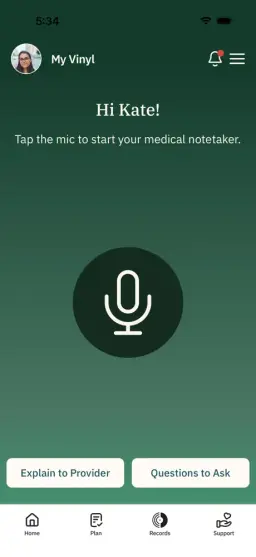
If you’re using Vinyl Health:
Vinyl Health doesn’t keep the whole transcript, I just get the summary and the next steps in my app so I can remember what I need to do.
If you’re there with a parent, try this:
Dad’s had a lot of changes and my brother couldn’t make it. Is it okay if I record so we all hear the same plan?
What if my doctor says no?
Respect it. Then ask for the next best thing.
- “Could you write down the medication changes for me?”
- “Can you put the plan in my visit summary?”
- “Is it okay if I take notes on my phone?”
A no is often about a clinic policy or a bad experience in the past. It’s usually not about you.
If you feel up for it, ask your provider if they could reconsider or ask about the clinic policy for your next visit. Recording makes a big difference in understanding and follow-through on the plan.
Can I record a visit for someone else?
Yes. Get that person’s permission first. In the ten states you also need the clinician’s okay. If your parent can no longer decide for themselves, the person with legal authority speaks for them. That’s often whoever holds their health care power of attorney. If you’re the one coordinating care for a parent or partner, Vinyl for caregivers was built for you.
Where does the recording go?
That depends on the app. With Vinyl the audio never leaves your phone. The visit becomes a plain language summary and only that summary is saved. You decide who in your family or care team gets to see it. You can see how Vinyl works from start to finish.
FAQ
Can my doctor refuse to be recorded? Yes. In the ten states you can’t legally record without their okay. Everywhere else it’s still their right to say no.
Do I need written permission? Usually not. A clear spoken yes at the start of the recording is the common practice. Some clinics have their own form, so ask.
Does HIPAA stop me from recording my own visit? No. HIPAA covers how health care organizations handle your information. It doesn’t stop you from recording a conversation you’re part of.
What about video visits? Same rules. If you and your doctor are in different states, follow the stricter one. Or just ask.
More questions about Vinyl itself? Our FAQ has answers for individuals and providers.
Try Vinyl’s Notetaker
Record your visit and get a plain language summary and next steps in your app. The audio never leaves your phone.
Get the app