Care Navigation Software Covers the Clinic Side. Who Covers the Patient’s Side?
Care navigation software helps your team track patients. But the patient goes home with none of it. Here’s the gap, and how a patient held record closes it.

Last reviewed November 2026. Medically reviewed by Dr. Kaitlan Baston, MD, MSc.
Care navigation software helps your team see a patient’s journey. It tracks referrals, tasks, outreach and barriers. What it usually doesn’t do is give the patient anything to hold. When the call ends, the patient and their family go home with whatever they remembered. A patient held record closes that gap by giving the patient and their helpers the same plan your team is working from.
If you’re a care navigator, you already know the feeling. You did everything right. The referral went in. The ride was scheduled. Then the patient missed the appointment because the date lived on a sticky note that got thrown out. Or because something else came up but the patient didn’t have a way to close the loop with you.
What care navigation software does well
Good navigation platforms are built for the care team. They help you:
- Track open referrals and follow ups across a panel
- Log outreach and screen for social needs
- Hand off work between navigators and departments
- Report on who is stuck and why
That’s real value. It just lives only on the clinic side of the screen.
Where it stops
Most of a patient’s care happens between visits. At the kitchen table. In the pharmacy line. On the phone with an insurance company. During that time the patient is the only person interpreting, remembering, and carrying the plan, often with a daughter or a neighbor helping.
Your software can’t see a ride that fell through on Thursday or a new medication that isn’t sitting right. Patients often don’t call because they aren’t sure it’s worth bothering anyone. By the time your team finds out, the plan has already slipped.
What the patient side needs
The patient side of navigation needs something simple.
- One place for the plan, the medications and the next appointments
- A way to ask for help in their own words when a need comes up
- A way to keep the family in the loop without sharing everything
- A summary they can actually read after a visit
When the patient holds that, your navigators stop being the only memory in the system, loops are finally closed, and information becomes real time without the phone tag.
How the two sides work together
This isn’t just a new clinic navigation platform. It’s a new way of addressing care and social drivers of health needs… by including the other half of them. Your team keeps managing the panel. The patient keeps the plan. When a need shows up, it shows up in the patient’s words the day it happens, not three weeks later at the next screening after the appointment was already missed.
How Vinyl fits
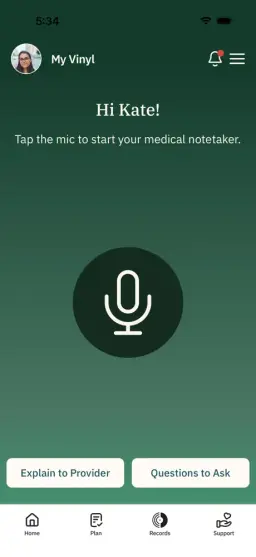
Vinyl is the patient side. Patients record a visit and get a plain summary with next steps. Their records and medications live in one place. With the Support tab, a patient can post a need like, “I need a ride Thursday”, and the people they’ve chosen can see their request and sign up. Care navigators and the patient’s support network can only see requests and updates the patient shares, so family and friends can help without seeing the whole record. Navigators stay in the loop when the family can handle the ride, so they don’t need to set one up… or when the car breaks down the day before the appointment and suddenly a ride is needed.
Want the full picture? See how Vinyl works with care navigators and how it supports providers and health systems.
FAQ
What is care navigation software?
It’s software that helps care teams track patients through referrals, follow ups and barriers to care. It’s mostly used by navigators, care managers and community health workers.
What’s the difference between care navigation software and a patient app?
Navigation software is built only for the care team. A patient held record is built for the patient and family, and can loop the navigators in. The best results come when both sides have the plan.
How do patients ask for help between visits?
Many don’t, because they don’t know who to ask or don’t want to bother anyone. Giving them a simple place to post a need lowers that barrier.
Give your patients the other half of the plan. See how Vinyl helps care navigators.
Try Vinyl’s Notetaker
Record your visit and get a plain language summary and next steps in your app. The audio never leaves your phone.
Get the app